




 Top Turf
Beat the July Drought: Smart Watering Strategies for Southern Lawns
 Top Turf : 7/14/26, 9:48 AM
July heat stressing your lawn? Learn smart watering strategies to keep Southern lawns healthy without wasting water or your money.
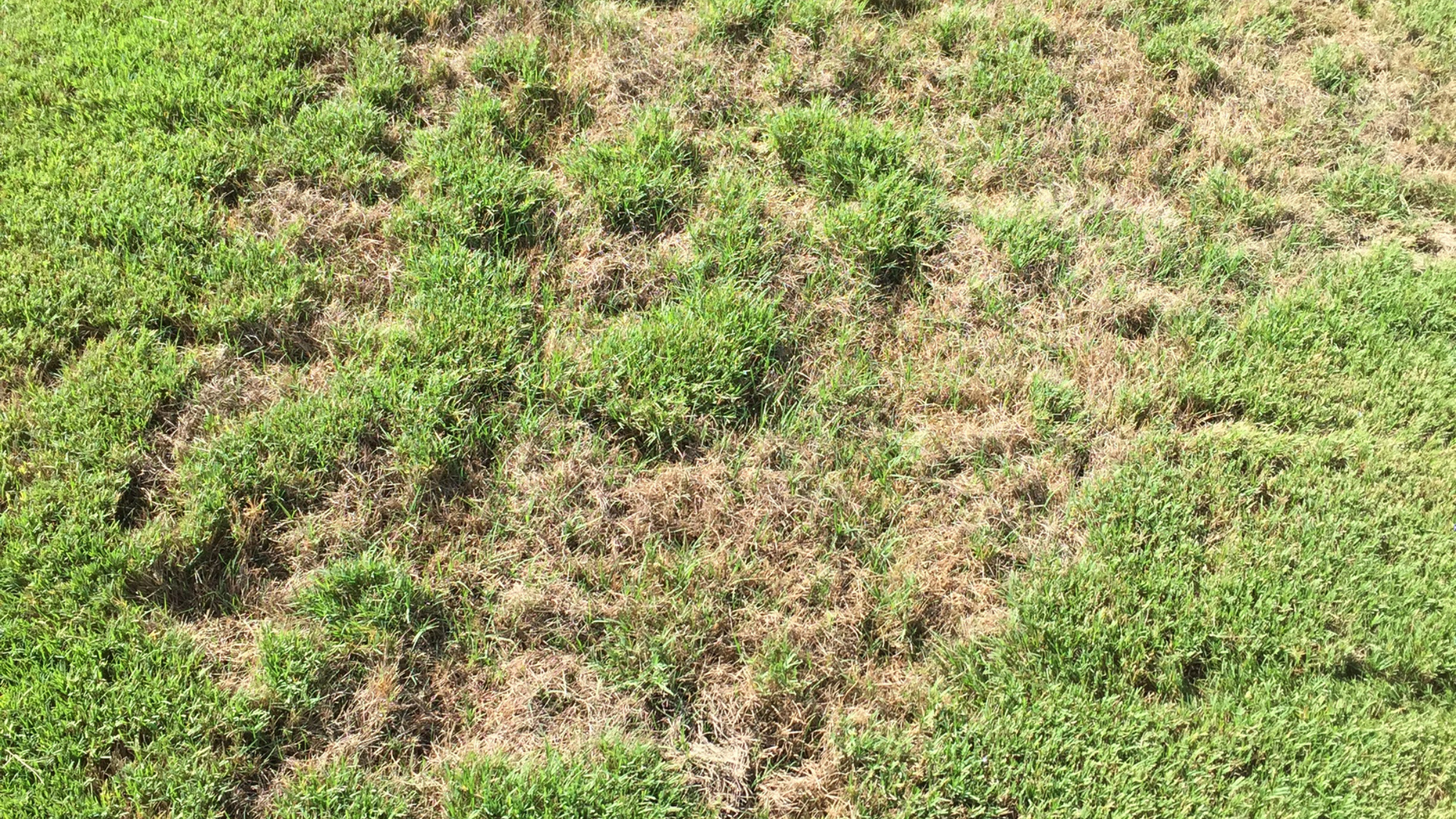
Summer in the Southeast is no joke. When temperatures are pushing 95°F in Atlanta, Nashville, and Dallas-Fort Worth, and the humidity is doing its thing, your lawn feels every bit of it. If your grass is looking a little rough lately, you might be wondering: is something wrong, or is this just… summer?
Good news: a stressed lawn is not the same as a dead lawn. Here's how to read what your grass is telling you — and what to actually do about it.
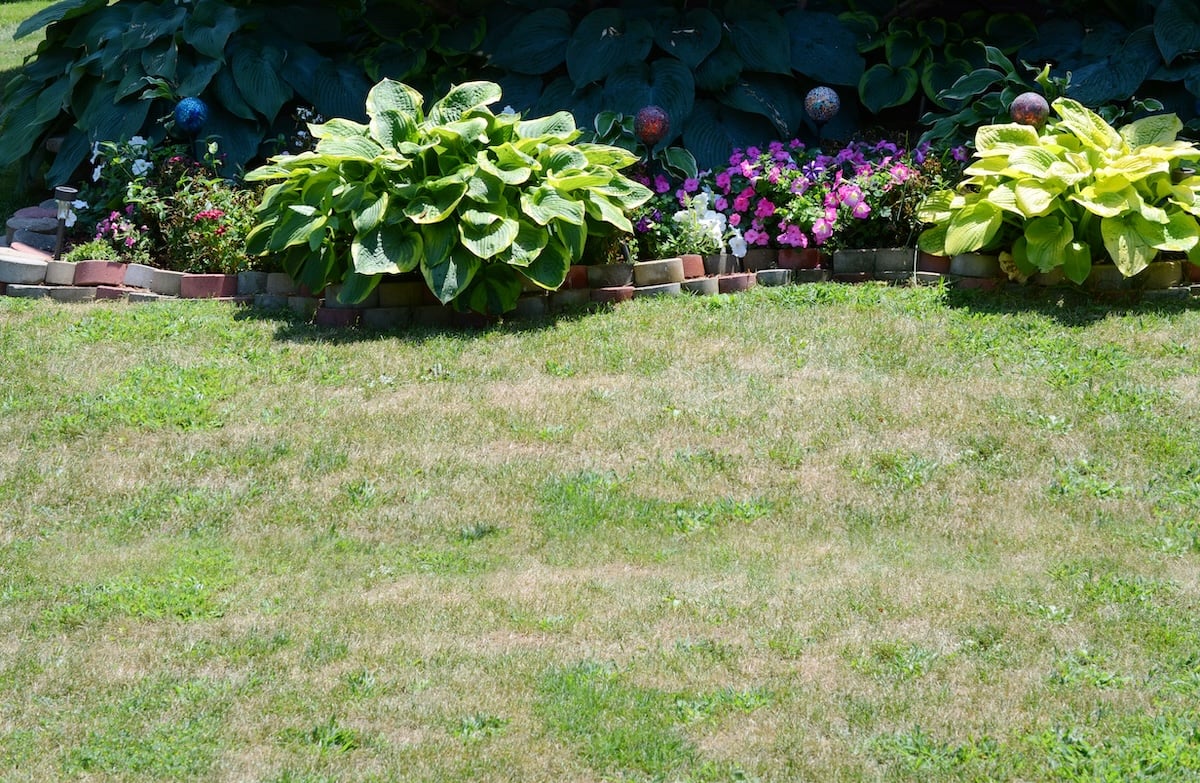
Heat stress shows up in a few tell-tale ways. The most obvious sign is a blue-grey or dull green color shift in your turf, it looks less vibrant, a little washed out. You might also notice:
- Footprints that stay visible. Healthy grass springs back when you walk on it. Heat-stressed grass doesn't. If you can see your footprints lingering in the lawn 30 minutes after you walked across it, your turf is telling you it's parched.
- Leaf blade curling or rolling. Grass blades will curl lengthwise to reduce moisture loss. It's a survival move, but it's a red flag.
- Patches thinning or browning. Often starts in the sunniest, most exposed parts of the yard — south-facing slopes, areas near pavement or driveways, or spots where the soil drains extra fast.
The key thing to know: this is stress, not death. Most warm-season grasses like Bermuda and Zoysia are remarkably tough. They go dormant when conditions get rough, but they bounce back. Tall Fescue, common in Charlotte and the Greenville-Spartanburg area, is a cool-season grass and is more vulnerable to sustained summer heat, so it needs extra attention during heat waves.
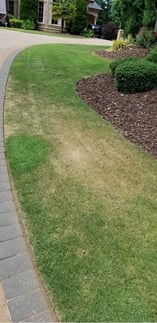
These two often come as a package deal, but they're not quite the same thing.
Drought stress is about moisture. Your grass isn't getting enough water — whether from rainfall, irrigation, or both.
Heat stress is about temperature. Even if your lawn is getting watered, extreme heat can outpace the grass's ability to recover. Soil temperatures above 90°F slow root activity significantly, and sustained heat (day after day with no cool nights) adds up.
In the Southeast, you usually get both at once in June, July, and August. The solution involves both watering smarter and reducing other stressors on the lawn.
The single best thing you can do for a heat-stressed lawn is water deeply and infrequently. This means:
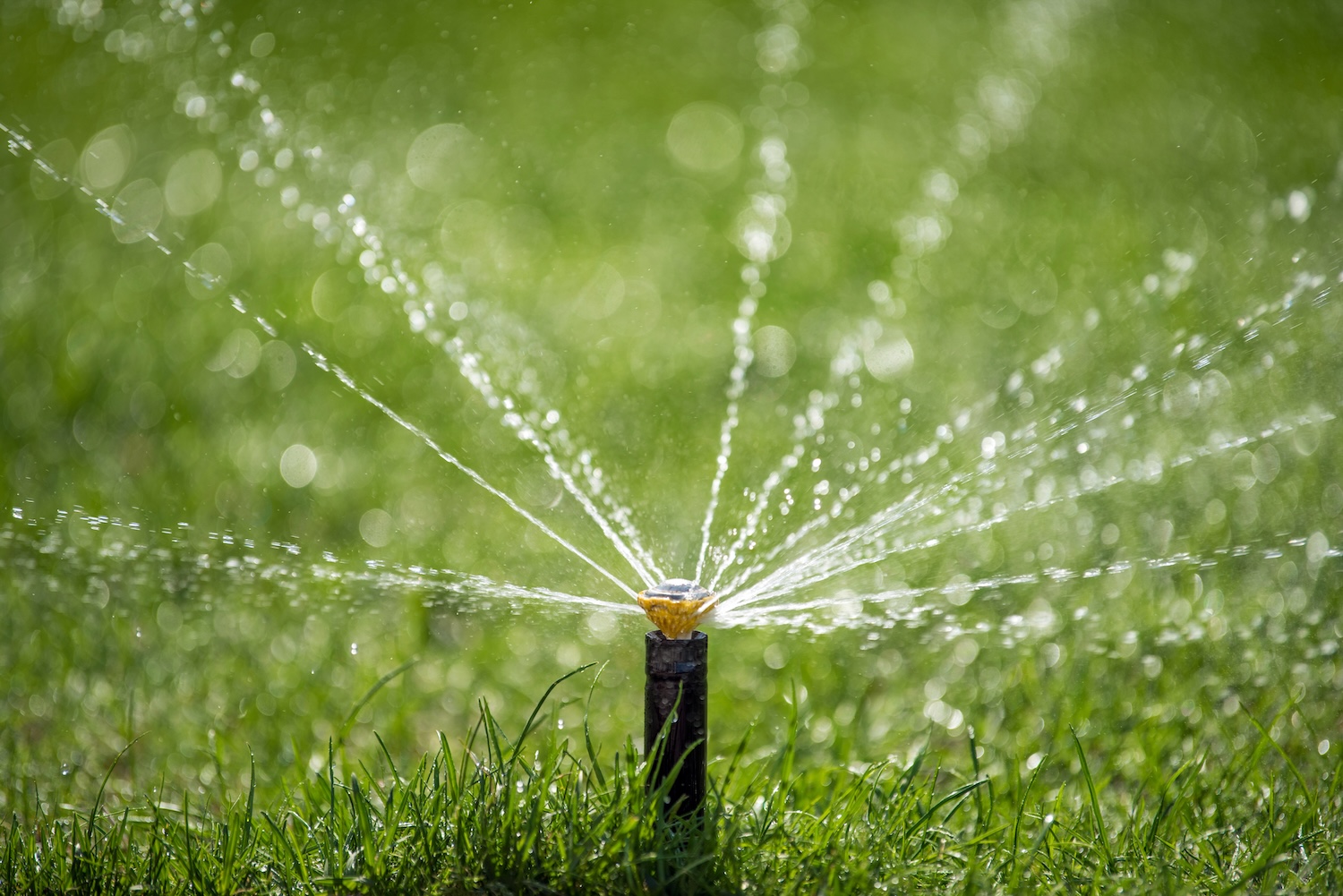
Water in the early morning. Between 2-6 AM is ideal. The water soaks into the soil before the heat of the day causes evaporation, and the grass blades dry out quickly once the sun comes up (which helps prevent fungal issues).
Go deep, not frequent. Most lawns need about 1 to 1.5 inches of water per week during hot, dry stretches. A long, slow soak 2–3 times per week encourages deep root growth far better than a light sprinkle every day. Deep roots = more drought-resilient grass.
Don't water in the evening. It sounds logical, but wet grass overnight is a recipe for fungal disease — and you've already got enough to worry about in the summer.
Check your irrigation coverage. Hot spots and dry patches are often irrigation coverage gaps in disguise. If the same areas of your lawn get stressed every summer, it's worth doing a catch-can test (or asking a pro) to verify your sprinklers are covering those zones evenly.
Read more: Watering Instructions (How Much To Water Your Lawn)
Water is the biggest lever, but it's not the only one.
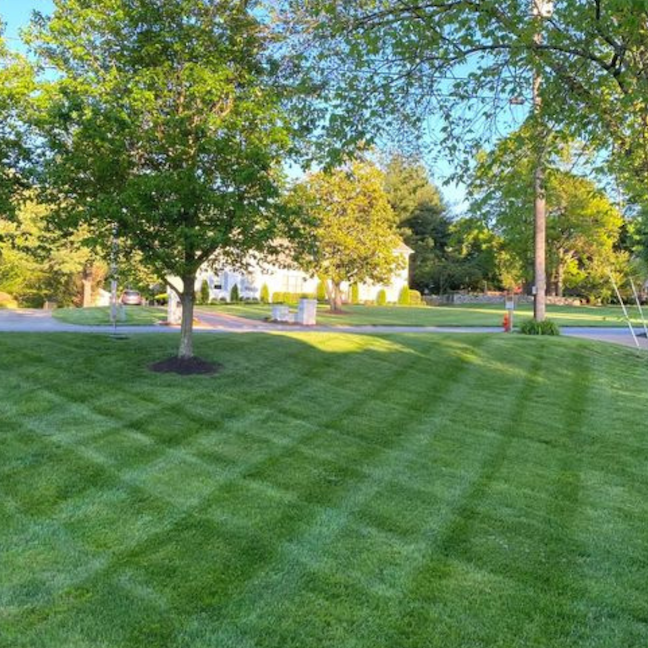
Raise your mowing height. Taller grass blades shade the soil, keeping it cooler and reducing moisture evaporation. For Bermuda and Zoysia, aim for the higher end of their recommended range during peak summer. For Tall Fescue, 3.5–4 inches is not too tall — it's smart.
Read more: How To Mow Your Lawn Correctly
Lay off the lawn. Heavy foot traffic on a heat-stressed lawn can cause real damage. Compacted, stressed soil struggles to recover. If you have kids or pets making daily circuits across the yard, try to redirect some of that traffic while the worst heat passes.
Don't panic-treat brown grass. Browning from heat and drought is often temporary dormancy, not death. Overwatering, over-fertilizing, or applying unnecessary chemicals at this stage can actually cause more damage than the heat itself.
Some lawn heat stress situations are genuinely complex, and it can be hard to tell from the surface whether you're dealing with drought stress, a fungal issue, insect damage (grubs and chinch bugs can cause very similar symptoms), or a soil problem.
If your lawn is struggling despite decent watering, or if large patches aren't rebounding after a cool stretch, it's worth having someone take a look. Top Turf's lawn care team serves homeowners across Nashville, Charlotte, Greenville-Spartanburg, Atlanta, and Dallas-Fort Worth, and diagnosing what's actually going on is exactly the kind of thing a quick visit can sort out.
Your lawn is tougher than it looks. Give it the right kind of support this season and it'll reward you with a strong finish come fall.
 Top Turf : 7/14/26, 9:48 AM
July heat stressing your lawn? Learn smart watering strategies to keep Southern lawns healthy without wasting water or your money.
 Top Turf : 5/19/26, 11:21 AM
Discover the ideal mowing heights for Bermuda, Zoysia, and Tall Fescue lawns across the southeastern US to keep your grass healthy all summer.
 Top Turf : 7/28/26, 9:17 AM
Late-July heat hits every Southern lawn differently. Here's what your grass needs right now in Nashville, Charlotte, Atlanta, Greenville-Spartanburg,...