

Skip to the main content.
Call Today!    phone-volume-solid

3 min read

Your Last Mow of the Season: How to Know When to Stop (and What to Do Before You Park the Mower)

Your Last Mow of the Season: How to Know When to Stop (and What to Do Before You Park the Mower)

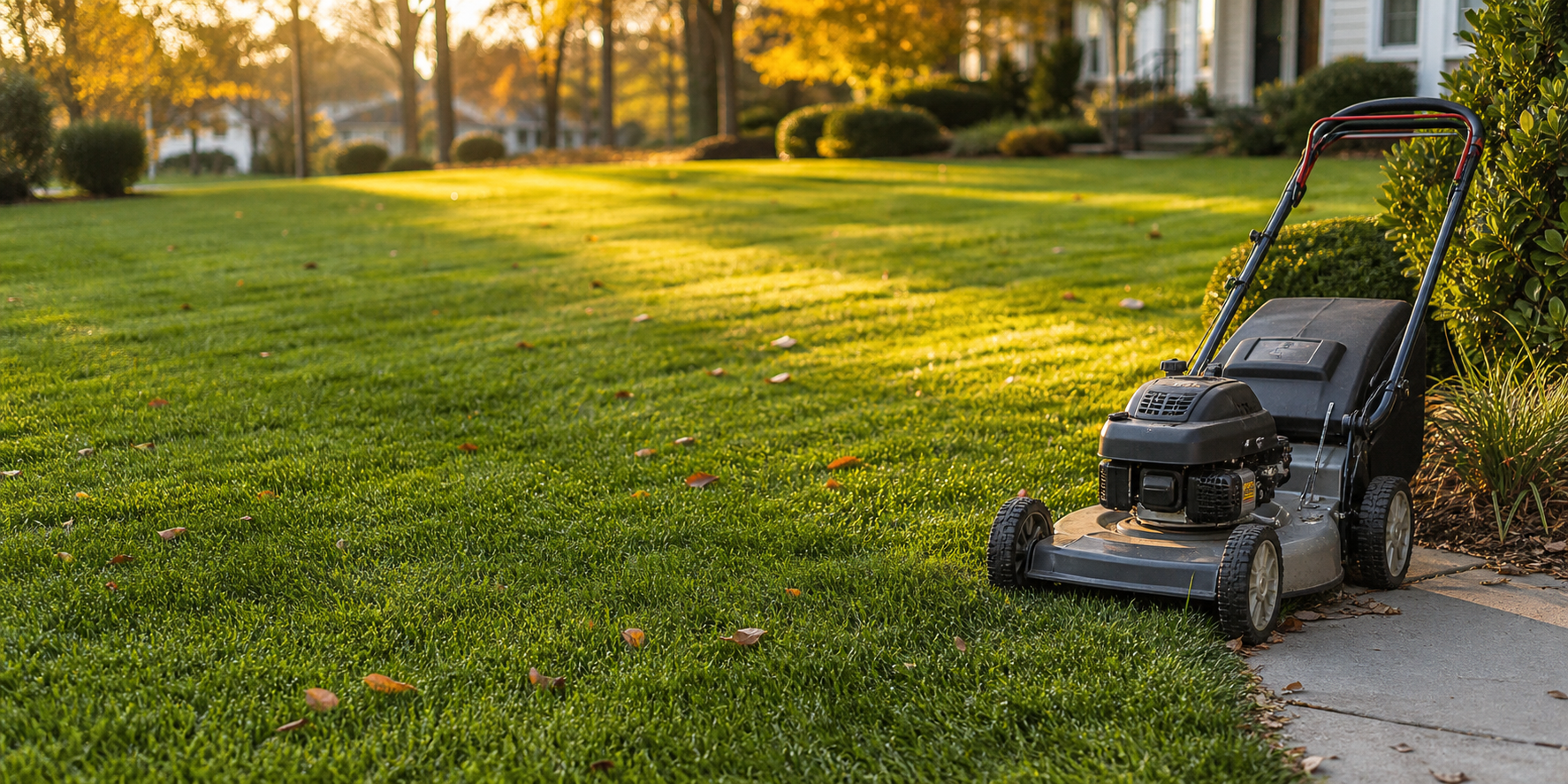
The leaves are falling, the mornings are crisp, and you're starting to wonder: is it finally time to put the mower away? Not quite yet. The last few cuts of the year matter more than you might think, and getting them right sets your lawn up for a stronger start next spring.

So, When Do You Actually Stop Mowing?

There's no magic date on the calendar. Your lawn tells you when it's done. Grass stops growing when temperatures drop, and a good rule of thumb is that mowing ends once growth stops, usually after your first hard freeze or when daytime highs stay in the 50s.

In Dallas-Fort Worth and Atlanta, that might not happen until late November or even early December. In Nashville and Charlotte, you may be done by mid-November. Up in the Greenville-Spartanburg foothills, it can fall somewhere in between. Don't mow by the calendar. Mow by the grass.

Here's a simple test: if you can still see the grass blades visibly gaining height a week after a cut, keep mowing. If it looks about the same, you're likely finished.

See more: Fall Cleanup Checklist: The Ultimate Guide for Yard & Garden Prep

Warm-Season Grasses: Bermuda and Zoysia Head to Bed

Bermuda and Zoysia are going dormant right now, and that's perfectly normal. As the days shorten and nights cool off, they slow down, turn tan or straw-colored, and stop needing regular cuts.

For your final mow or two, you can drop the height slightly, about a half inch lower than your summer setting. For Bermuda, that often means around 1.5 to 2 inches, and for Zoysia, around 2 to 2.5 inches. A slightly shorter cut helps clear off the last of the leaf litter and dead growth, and it keeps the lawn tidy through winter.

But don't scalp it. Cutting dormant grass down to the dirt exposes the crowns to cold and invites winter weeds like henbit and chickweed to move in. Lower is fine. Bare is not.

Tall Fescue: Keep Going a Little Longer

If you have Tall Fescue, you're on a different schedule. Cool-season grasses love fall weather, and your lawn may still be growing strong into November, especially if you aerated and seeded this season.

Keep your mower set to a taller height, around 3 to 3.5 inches, for most of the fall. On your final mow, you can come down to about 2.5 to 3 inches. That's short enough to prevent the grass from matting down under leaves and snow, but tall enough to protect the crowns.

If you recently overseeded, wait until new grass is at least 3 to 4 inches tall before its first mow, and make sure your blade is sharp so you don't tear up young seedlings.

Park Your Mower the Right Way

Once that final cut is done, give your mower a little love before it goes to bed for the winter. Future you will be grateful in March.

- Clean the deck. Scrape off caked-on grass and debris to prevent rust.
- Sharpen or replace the blade. A sharp blade makes a cleaner cut, and winter is the perfect time to do it before the spring rush.
- Handle the fuel. Either run the tank nearly empty or add a fuel stabilizer so gas doesn't gum up your carburetor.
- Change the oil and check the air filter. Quick wins that keep things running smoothly.
- Store it somewhere dry. A garage or shed beats a rainy side yard every time.

See more: Don't Get Caught by the First Freeze: Your Fall Sprinkler Winterization Checklist

Let Us Handle the Rest

If all of this sounds like one more thing on your fall to-do list, we get it. You keep up with the mowing, and Top Turf will take care of the rest. Our Fertilization and Weed Control Program serves homeowners across Nashville, Charlotte, Greenville-Spartanburg, Atlanta, and Dallas-Fort Worth. Each treatment is matched to your grass type and timed for your area, so your lawn gets what it needs at the right time all year. That includes fall feedings that help it recover and pre-emergent treatments that stop winter weeds before they show up.

Want to talk about winter weed control, fall fertilization, or getting your lawn ready for spring? Reach out to your local Top Turf team any time. We’re always happy to help.

How Low Should You Go? Your Southern Lawn's Ideal Mowing Height for Summer

How Low Should You Go? Your Southern Lawn's Ideal Mowing Height for Summer

Discover the ideal mowing heights for Bermuda, Zoysia, and Tall Fescue lawns across the southeastern US to keep your grass healthy all summer.
Large Patch Fungus: Why Your Zoysia and Bermuda Lawn Has Circles of Brown This Fall

Large Patch Fungus: Why Your Zoysia and Bermuda Lawn Has Circles of Brown This Fall

Brown circles in your zoysia or Bermuda lawn this fall? Learn what large patch fungus is, why it shows up now, and how to stop it.

Mow-mentum: Mastering Your Summer Lawn Care Routine

Mow-mentum: Mastering Your Summer Lawn Care Routine

Learn how to make your lawn healthy and green with these summer mowing tips.