




The Nashville Homeowner's Guide to Lawn Fertilization and Weed Control
Nashville lawns live in the transition zone. Learn the right fertilization and weed control timing for Fescue, Bermuda, and Zoysia in Middle...

4 min read
Top Turf
:
Published
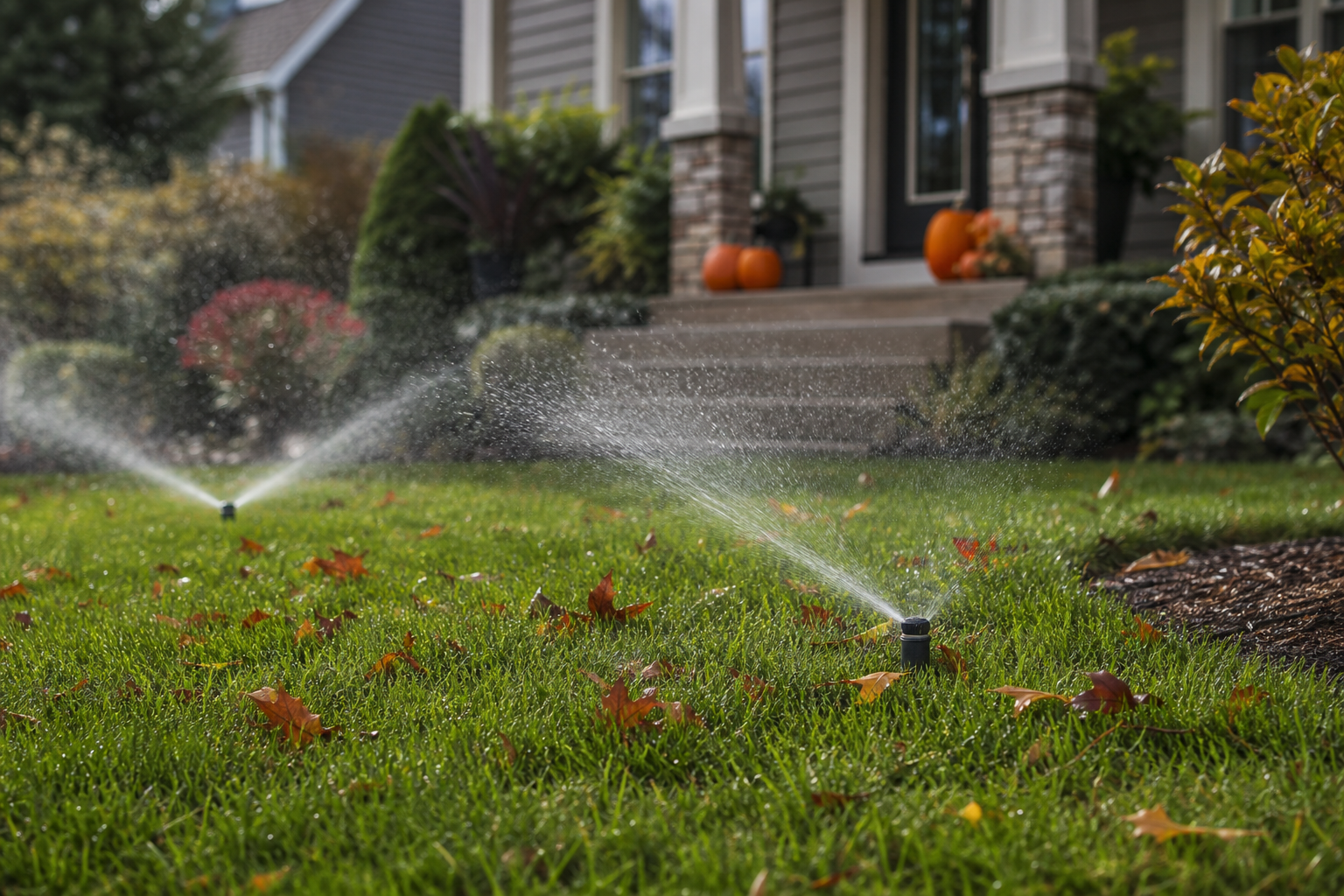
The mornings are getting crisper, the leaves are starting to turn, and somewhere out there, your sprinkler system is still full of water. That's a problem waiting to happen.
Here in the Southeast, it's easy to put off winterizing. We don't get the brutal, months-long deep freezes that irrigation systems up north have to worry about. But "mild winter" doesn't mean "no winter", and it only takes one hard overnight freeze in Nashville, Charlotte, Greenville-Spartanburg, Atlanta, or Dallas-Fort Worth to crack a pipe, split a valve, or blow out a backflow preventer you didn't even know was vulnerable.
So before the first freeze catches you off guard, let's walk through what it actually takes to put your system to bed for the season.
Water expands by about nine percent when it freezes. If there's standing water anywhere in your irrigation lines, valves, or backflow device when the temperature dips below freezing, that expansion has to go somewhere, and "somewhere" usually means a cracked pipe fitting or a split valve body.
The tricky part about Southern winters is the swing. One week it's 55 degrees and sunny, the next you've got an overnight low in the 20s. That freeze-thaw-freeze pattern is actually harder on exposed plumbing than a steady, predictable cold snap, because homeowners assume they have more time than they do. Nashville and the upstate areas around Greenville-Spartanburg tend to see their first hard freeze earlier, often by early-to-mid November, while Charlotte and Atlanta usually follow a week or two later. Dallas-Fort Worth often stays milder a bit longer into November, but Texas winters have a way of throwing in a surprise arctic blast that catches everyone off guard. Either way, the safest move is to winterize before you need to, not after a pipe has already split.
Start at the source. Locate your system's shutoff valve, usually near where the irrigation line branches off your main water supply, and turn it off. This stops any new water from entering the system while you work.
Next, turn your attention to the backflow preventer, that above-ground assembly of pipes and valves usually sitting near your house or a fence line. It's one of the most freeze-vulnerable parts of the whole system because it's exposed to the air on all sides. Wrap it in a foam or fabric insulation cover (sold at most hardware stores for well under $20), and make sure any exposed piping around it gets wrapped too. Whatever you do, don't use plastic bags or wrap it airtight in a way that traps moisture, you want insulation, not a sauna for your pipes.
This is the step people skip, and it's the one that matters most. Shutting off the water supply doesn't empty the pipes — there's still water sitting in every zone, every lateral line, and every sprinkler head underground.
There are a few ways to clear it:
Manual drain valves — if your system has them, open each one and let gravity do the work. This is the simplest method but doesn't always get every last drop.
Auto-drain heads — some systems are designed to drain themselves once pressure drops. Check your manufacturer's setup to confirm you have these.
Blow-out method — this is the most thorough option and what most professionals use. It involves connecting an air compressor to the system and forcing compressed air through each zone to push out remaining water. This one comes with a real caveat: it requires the right size compressor (too small and it won't clear the lines; too big and you risk damaging valves and sprinkler heads), and it involves working with pressurized air near irrigation components, which can be genuinely risky if you haven't done it before. Please considering consulting a professional before proceeding with this method.
While you're out there, take a lap around your yard and check for any above-ground vulnerabilities. Drip irrigation tubing, exposed risers, and any hose bibs connected to the system should get insulated or disconnected. If you have a rain sensor or flow sensor mounted outside, give it a quick visual check to make sure it's secure and not holding water that could freeze and crack the housing.
This is also a good time to walk your lawn and note any sprinkler heads that have been sinking, tilting, or getting overrun by grass through the summer. You won't be running the system again until spring, so jot down what needs fixing now while it's fresh in your mind, future you will be grateful.
Step 4: Don't Just Turn Off the Controller — Reprogram It
Here's a step a lot of homeowners miss: simply switching your controller to "off" isn't the same as winterizing, and it's easy to forget it's sitting there mid-cycle if you don't address it directly. Set your controller to "rain" or "off" mode rather than just unplugging it, so it doesn't try to fire up a zone during an unexpected warm spell (yes, it happens). If your controller runs on battery backup, this is also a smart time to check or replace those batteries so your programming isn't lost over the winter.
If you've made it this far and realized your system is still fully charged with water heading into a cold snap, don't panic, but don't wait either. A same-day or next-day shutoff and drain is almost always possible, and it's a lot cheaper than a spring repair bill for a cracked mainline or a replaced backflow assembly.
Winterizing your irrigation system properly is one of those tasks that's easy to put off precisely because nothing bad happens... until it does, all at once, on the coldest morning of the year. Top Turf doesn't provide sprinkler or irrigation services, so we recommend contacting a licensed irrigation professional in your area to handle your shutoff, drain, and blow-out.
While your irrigation pro takes care of the pipes, let Top Turf take care of the grass. Our Fertilization and Weed Control Program serves homeowners across Nashville, Charlotte, Greenville-Spartanburg, Atlanta, and Dallas-Fort Worth, with seasonal treatments timed to keep your lawn healthy through the winter and ready to green up strong in the spring. Reach out today to get your lawn on a plan before the next season rolls in.
Nashville lawns live in the transition zone. Learn the right fertilization and weed control timing for Fescue, Bermuda, and Zoysia in Middle...
Metallic green bugs skeletonizing your plants? Get answers on Japanese beetles—why they're here, what they damage, and how to fight back.
Late August is prime time to plan tall fescue aeration and overseeding. Here's the lawn science behind fall green-up and how to prep now.