



1 min read
How Low Should You Go? Your Southern Lawn's Ideal Mowing Height for Summer
If you've ever stepped off the mower, looked at your yard, and thought, "Hmm, that looks a little...scalped," you're not alone. Mowing height is one...
6 min read
Top Turf
:
Updated on May 22, 2026
If you've ever stood in your backyard in July wondering why your neighbor's lawn looks like a golf course while yours is patchy and full of weeds, the answer usually comes down to one thing: timing. Nashville's unique climate — sitting squarely in what turf professionals call the "transition zone" — means that the fertilization and weed control advice you find online is often written for somewhere else. What works in Miami or Minneapolis probably won't work here in Nashville.
This guide is written specifically for Nashville-area homeowners. We'll walk through the grass types that thrive in Middle Tennessee, when and how to fertilize them, how to get ahead of weeds before they take over, and what signs suggest it's time to call in a professional.
The greater Nashville area sits in a climatic no-man's-land: too hot and humid in the summer for cool-season grasses to thrive comfortably, but cold enough in the winter that warm-season grasses go fully dormant and can be vulnerable to a hard freeze. This "transition zone" means your lawn strategy has to be more nuanced than most.
The good news is that Nashville can actually support some of the most beautiful lawns in the country — but only if you understand what your specific grass type needs, and when.
Everything else in this guide depends on which type of grass you have. Nashville lawns typically fall into one of three categories:
Tall Fescue is the most common grass in the Nashville area. It's a cool-season grass that stays green through the winter and goes semi-dormant during the hottest stretches of summer. Most Nashville subdivisions were seeded with Tall Fescue because it handles shade reasonably well and looks good from fall through spring. If your lawn is green in cold December, you almost certainly have Fescue.
Bermuda Grass is a warm-season grass that loves Nashville summers but turns completely brown and goes dormant from late fall through early spring. But come spring, it wakes up into a beautiful green once again. It's aggressive, drought-tolerant, and can produce a very dense, attractive turf — but it requires full sun and a different care calendar than Fescue.
Zoysia Grass is a warm-season option growing in popularity across Middle Tennessee. Like Bermuda, it goes dormant in winter. It's slightly more shade-tolerant than Bermuda, has a finer texture, and tends to be softer underfoot. Many homeowners who've had Zoysia installed love how it looks at peak season.
If you're not sure what you have, look at your lawn in late February: if it's green, it's cool-season (almost certainly Fescue). If it's brown, it's warm-season (Bermuda or Zoysia).
Fescue's growth is driven by cool temperatures, which means its hunger for nutrients peaks in the fall — not the spring. Many Nashville homeowners make the mistake of heavy spring feeding, which pushes lush green growth right before the brutal summer stress period. That extra growth is hard to sustain, and it can actually weaken the turf heading into July and August.
Fall (September – November): Primary fertilization window. This is when Fescue is actively recovering from summer stress and building root mass for the winter. A quality, slow-release fertilizer applied in early September and again in late October or November gives Fescue exactly what it needs to head into the winter strong so it can have a vibrant spring.
Spring (March – April): Light application only. A modest, balanced fertilizer application in early spring supports the green-up period without overstimulating growth.
Summer (May – August): Minimal or no fertilization. Fescue is under stress during Nashville summers. Heavy feeding during this window does more harm than good. Focus on proper mowing height (keep it at 3.5 to 4 inches) and consistent watering, with light fertilization as needed.
Bermuda is the opposite of Fescue in almost every way. It feeds heavily during the summer growing season and wants nothing during dormancy.
Late Spring (May – June): Begin feeding. Wait until Bermuda has fully greened up and nighttime temperatures are consistently above 60°F before applying fertilizer. Starting too early wastes product and can stress the turf.
Summer (June – August): Peak feeding season. Bermuda can take regular nitrogen applications throughout the summer. This is when it's actively growing and can make the most of what you put down.
Fall (September): Final light application. A light feeding in early September helps sustain color heading into dormancy, but stop well before the first expected frost. Pushing late-season growth makes Bermuda more vulnerable to winter damage.
Winter (October – April): No fertilization. Dormant Bermuda cannot use fertilizer, and late applications can encourage growth that gets damaged by frost.
Zoysia follows a similar pattern to Bermuda but is generally a slower-growing grass that doesn't need to be fed as aggressively. Follow the same spring-through-summer approach, but err on the slightly lighter side.
Weeds are a fact of life in Middle Tennessee, but how you handle them — and when — makes an enormous difference in how much of a battle you're fighting each season.
Pre-emergent herbicides prevent weed seeds from germinating. Applied at the right time, they're one of the most cost-effective tools in lawn care. Applied too late, they do nothing.
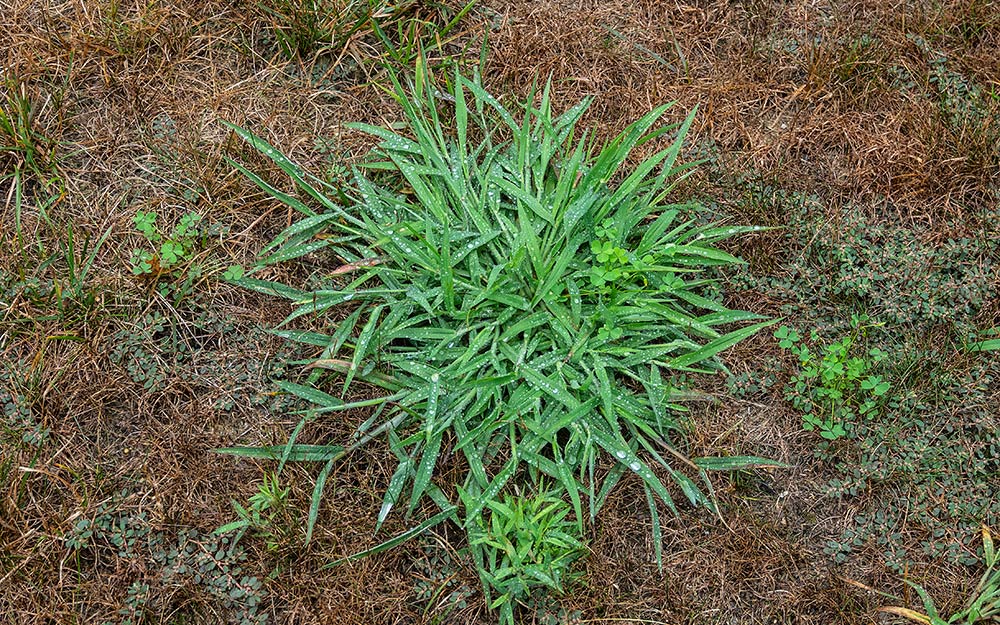
Spring pre-emergent (late February – mid-March): The target is crabgrass, the most common and aggressive summer annual weed in Nashville. The window opens when soil temperatures reach 50–55°F at a 2-inch depth — in Nashville, this typically falls between late February and mid-March depending on the year. Applying too early means the product breaks down before it's needed; too late and the crabgrass has already germinated.
Fall pre-emergent (September – October): This application targets winter annuals like chickweed, henbit, and annual bluegrass. These weeds germinate in the fall, overwinter as small plants, and then explode in growth in early spring. A fall pre-emergent stops them before they get started.
Even with a solid pre-emergent program, some weeds will always find a way in. Post-emergent herbicides target actively growing weeds and work best when:
Broadleaf weeds (dandelions, clover, wild violet, dollarweed) respond well to broadleaf-specific post-emergents applied in spring and fall. Avoid applying in summer heat, as both the weeds and the turf are more vulnerable to stress.
Nutsedge is a common nuisance in Nashville lawns — it looks a little like grass but grows faster and lighter green. It requires a nutsedge-specific herbicide and multiple treatments to manage effectively.
Crabgrass that has already emerged requires a post-emergent crabgrass killer, but it's much harder to eliminate than it is to prevent. If you're seeing a lot of it, focus on strengthening the pre-emergent program for next year.
Brown Patch Fungus is the most widespread lawn disease in Middle Tennessee, affecting Tall Fescue almost every summer. It appears as circular brown patches that can expand rapidly in hot, humid conditions — the kind Nashville delivers reliably from June through August. Proper fertilization timing (avoiding heavy nitrogen in summer), adequate air circulation, and watering in the early morning rather than evening significantly reduce risk. Fungicide applications in late spring can provide a protective window through the worst of the summer.
Compacted Soil is a widespread issue in Nashville, where heavy clay soils are common throughout Middle Tennessee. Compacted soil prevents water, oxygen, and nutrients from reaching the root zone, creating conditions where weeds thrive and turf struggles. Core aeration — ideally performed in early fall for Fescue and late spring for warm-season grasses — relieves compaction and makes every other input you put into your lawn work better. As a side note, core aeration is also often paired with overseeding with Fescue lawns. Overseeding is a blanket of Fescue seed applied overtop of the lawn to fill in the bare patches that are the result of summer heat stress and fungus.
Grubs (Japanese beetle larvae) feed on grass roots underground and can cause large sections of turf to die back in late summer. If you can pull up sections of turf like loose carpet in July or August, grubs are often the culprit. Preventive grub treatments applied in late spring are far more effective than rescue treatments after damage has occurred. A few grubs can be a good thing as they are part of the natural ecosystem, but an infestation can take out a lawn.
There's a lot a motivated homeowner can do on their own, but there are situations where professional lawn care makes more sense:
A professional lawn care company with local expertise — not just a national franchise running a one-size-fits-all program — can diagnose what's actually happening in your specific yard, using products and timing calibrated to Middle Tennessee conditions.
Top Turf has been serving the greater Nashville area for around 10 years now. Unlike national chains that apply the same generic program, our Nashville team knows Middle Tennessee — the clay soils, the transition zone grass challenges, the timing that actually works here. We offer customized fertilization and weed control programs, fungus control, core aeration and seeding, and lawn pest control, all tailored to your specific lawn and its needs.
If you'd like a professional assessment of your Nashville lawn, we'd love to help.
Have questions about your Nashville lawn? We're always happy to talk through what you're seeing and what might help. Contact us here!
1 min read
If you've ever stepped off the mower, looked at your yard, and thought, "Hmm, that looks a little...scalped," you're not alone. Mowing height is one...
1 min read
In a recent report by Zillow, the backyard has emerged as a must-have feature for homebuyers, signaling a shift in lifestyle preferences. The...
1 min read
When summer fades and cooler weather sets in, many homeowners mistakenly believe their lawn care routine can take a backseat. However, fall is a...