


1 min read
Crabgrass Is Sprouting Now: How to Identify and Stop It Before It Takes Over
Stepped outside lately and noticed some weird, wide-bladed grass pushing through your lawn in thick, star-shaped clumps? There's a good chance you're...
3 min read
Top Turf
:
June 1, 2026
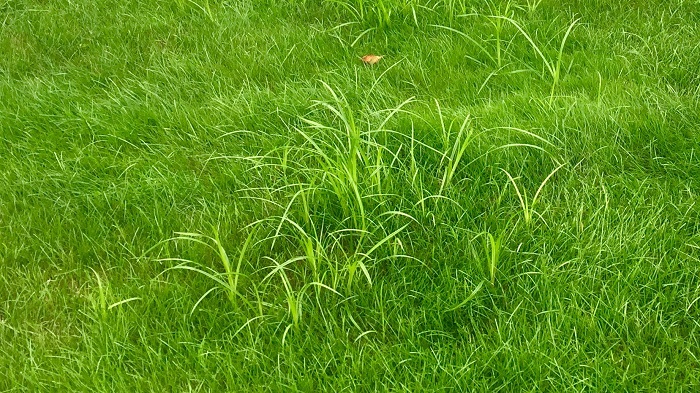
You mow on Saturday. By Tuesday, there's a patch of light green, fast-growing shoots poking up above the rest of your lawn like it didn't get the memo. Sound familiar? Odds are you're dealing with nutsedge — and you're definitely not alone.
Every summer across the Southeast, from Nashville to Atlanta to Dallas-Fort Worth, homeowners wage war on this stubborn weed. The good news: once you know what you're dealing with, you can fight back effectively.
Here's the first thing to know: nutsedge is not a grass. It's a sedge, a completely different plant family, which is exactly why your regular lawn weed control often doesn't touch it.
Yellow nutsedge (Cyperus esculentus) is the most common species in the Southeast. It's lime-green to yellow-green, grows noticeably faster than your turf, and feels thicker and stiffer than typical grass blades. The easiest way to confirm a nutsedge ID? Pinch the stem between your fingers. If it's triangular, it's a sedge. As the old saying goes: "Sedges have edges."
Nutsedge thrives in warm, moist conditions, which is why June through August is peak nutsedge season across the Southeast. It loves wet spots, areas with poor drainage, overwatered turf, and low-lying areas of your yard.
Video: What is Nutsedge?
This is where nutsedge earns its reputation. Underground, each plant produces small tubers called nutlets and this is the real enemy. A single nutsedge plant can produce dozens of nutlets in a season, each of which can survive in the soil for years and sprout into a new plant. If you try to pull nutsedge by hand, you'll usually snap the stem off above the nutlet, leaving it in the ground to regrow.
Mowing doesn't kill it either, it just slows it down temporarily. And because nutsedge isn't a true grass, broadleaf herbicides won't work on it. You need a product specifically labeled for sedge control, applied at the right time and rate.
In short: nutsedge is patient, persistent, and purpose-built to survive. Respect it accordingly.

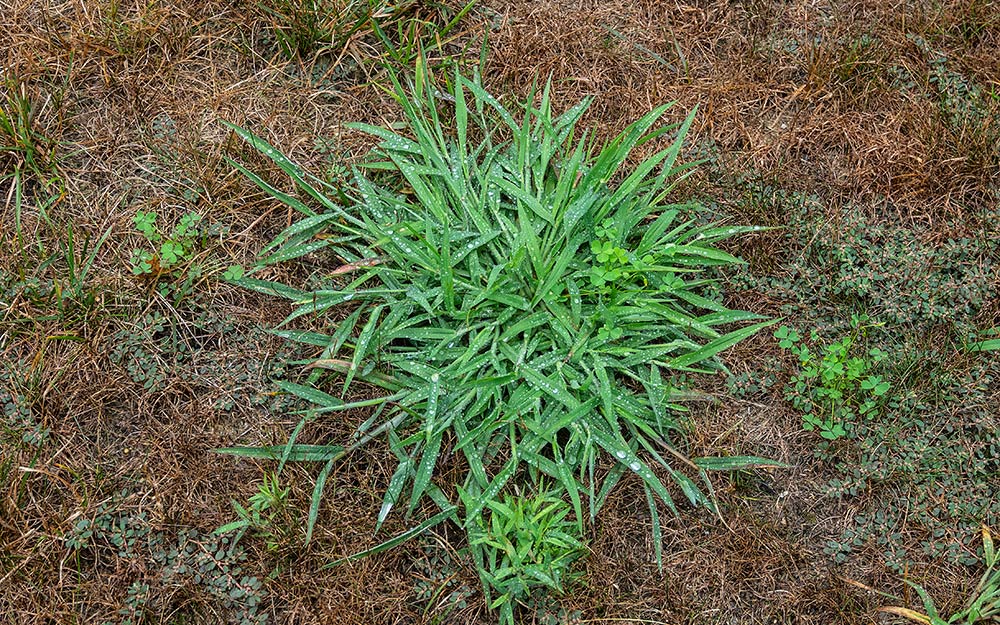
Because nutsedge looks a bit like grass at a glance, homeowners sometimes confuse it with crabgrass or just assume it's a clump of their lawn grass growing differently. Here's a quick cheat sheet:
- Color: Nutsedge is typically lighter green or yellow-green compared to your Bermuda or Zoysia turf
- Growth rate: It outpaces your lawn noticeably between mowings — if a section is consistently taller, look closer
- Stem shape: Round stem = grass. Triangular stem = sedge. Pinch test never lies.
- Leaf arrangement: Nutsedge leaves grow in sets of three from the base; grass leaves grow in two rows
If you're in a Tall Fescue lawn in the Charlotte or Greenville area, nutsedge can be a little trickier to spot since fescue is already a lighter green, but the triangular stem and rapid regrowth will still give it away.
Extended learning: Top Turf Info Center
Timing matters with nutsedge control. The best window for treatment is when plants are young and actively growing, typically when they're 6 inches tall or shorter, which means now, in early summer, is an ideal time to start.
Effective nutsedge control requires a sedge-specific herbicide. Products containing halosulfuron-methyl or sulfentrazone are commonly used for residential lawns. These need to be applied carefully according to label directions, and most require repeat applications because of those stubborn nutlets in the soil.
A few things to keep in mind:
- Don't expect overnight results. Nutsedge yellows and dies over 1–3 weeks after treatment. If it looks rough for a bit, that's normal.
- Address drainage issues. If you have a chronically wet spot where nutsedge keeps coming back year after year, no herbicide is a permanent fix. Improving drainage is the long-term solution.
- Stay consistent. Multiple treatments over the season, and potentially the following season, may be needed to exhaust the nutlet bank in the soil.
If nutsedge has taken over a significant portion of your lawn, or if you've been battling the same patches year after year without making a dent, it's time to bring in reinforcements. Proper sedge control requires the right product, the right rate, and the right timing, and using the wrong herbicide can actually stress your turf without doing much to the nutsedge at all.
At Top Turf, our lawn care specialists know nutsedge well. It's one of the most common summer complaints we hear from homeowners across Nashville, Charlotte, Greenville-Spartanburg, Atlanta, and the DFW area. Our weed control programs are built to target the weeds actually showing up in your lawn, including stubborn sedges that generic treatments miss.
If nutsedge has you frustrated, we'd love to take a look. Reach out to your local Top Turf team and let's get that lawn looking sharp again before summer really hits its stride.
1 min read
Stepped outside lately and noticed some weird, wide-bladed grass pushing through your lawn in thick, star-shaped clumps? There's a good chance you're...
1 min read
If you've ever stepped off the mower, looked at your yard, and thought, "Hmm, that looks a little...scalped," you're not alone. Mowing height is one...
1 min read
Weeds are a common nuisance for homeowners, and while they may seem harmless enough, they can actually pose a serious threat to the health of those...