



Skip to the main content.
Call Today!    phone-volume-solid

4 min read

What Are Those Webs in My Trees? Your Fall Webworm Questions, Answered

What Are Those Webs in My Trees? Your Fall Webworm Questions, Answered

You pulled into the driveway this week, looked up, and there it was — a big, messy, silky white bag wrapped around the end of a tree branch. By tomorrow there might be three more. It looks like something out of a Halloween display, and it showed up practically overnight.

Take a breath. You're looking at fall webworms, and they're one of the most common late-summer questions we get across Nashville, Charlotte, Atlanta, Greenville-Spartanburg, and DFW. Here's everything homeowners ask us about them.

So what exactly is in there?

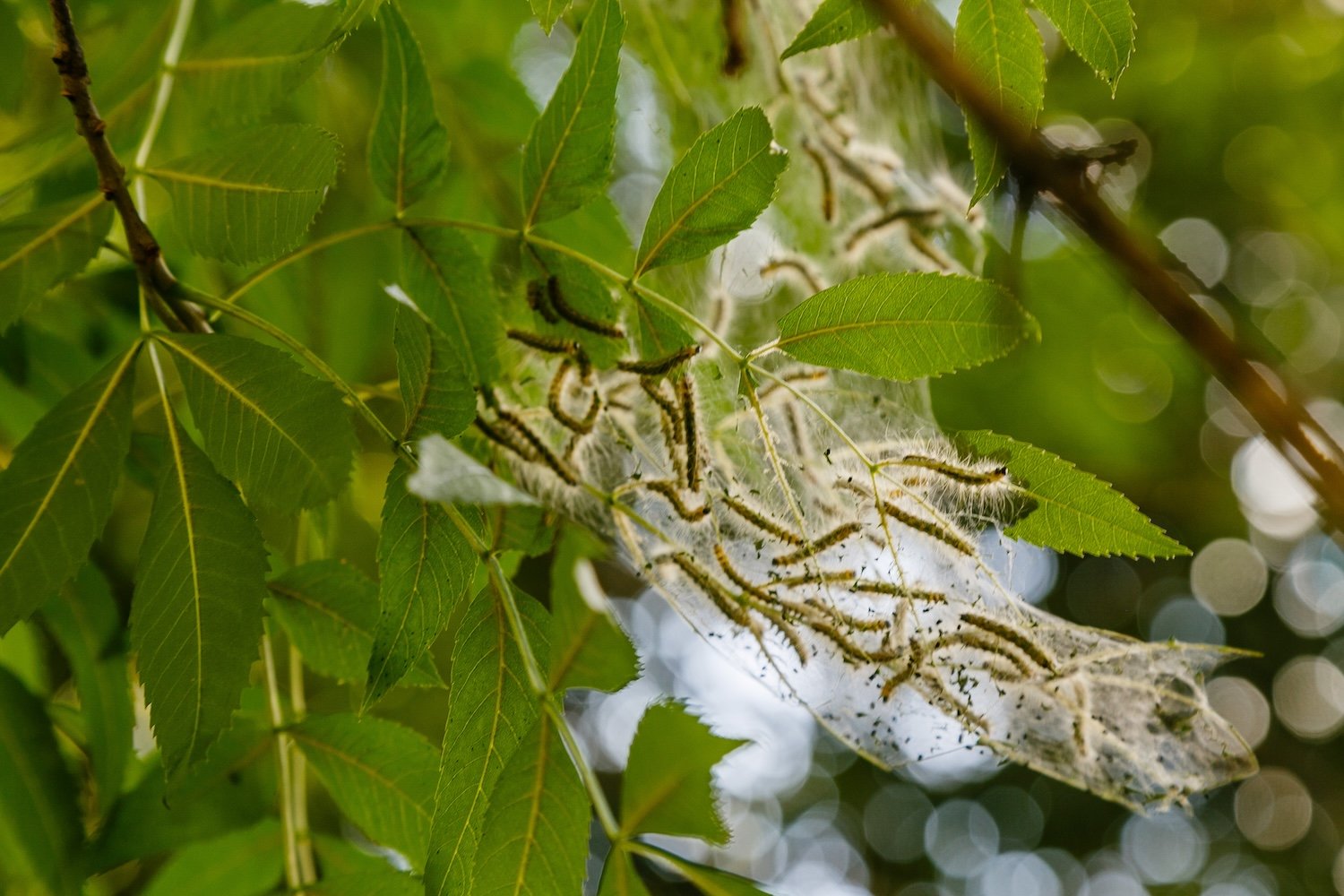
Fall webworms are caterpillars, the larval stage of a small white moth. After they hatch, they spin a communal silk tent around the leaves at the tip of a branch and eat from the inside out. As they run out of food, they simply expand the web to swallow up more leaves.

That's why the nest seems to grow so fast. It's not that the caterpillars are building a giant fortress for fun; they're just eating their way down the branch and taking the roof with them.

The caterpillars themselves are pale yellow to greenish, fuzzy, and covered in long white hairs, usually with rows of dark spots down their backs. If you tear open a web, you'll find dozens of them wriggling around in there along with a fair amount of frass (which is the polite word for caterpillar droppings).

See more: Japanese Beetle FAQ: What's Chewing Up Your Roses, Crape Myrtles, and Lawn This Summer?

Wait, aren't these tent caterpillars?

Nope, and this is the single most common mix-up we hear. Two easy tells:

Timing. Eastern tent caterpillars show up in early spring, usually on cherry and crabapple. Fall webworms show up in late summer and fall. If it's August or September, you've got webworms.

Location on the branch. Tent caterpillars build their nests in the *crotch* of a tree, where two branches split. Fall webworms build at the tip of the branch, out on the ends where the leaves are.

So: spring plus branch crotch equals tent caterpillar. Late summer plus branch tip equals fall webworm. Easy.

Here in the Deep South we actually get two or three generations a year, which is why some folks start noticing small webs as early as June. The late-summer batch is just the biggest and most obvious.

See also: Armyworms Are Marching: How to Spot (and Stop) This Summer's Sneakiest Lawn Invader

Are they going to kill my tree?

Almost certainly not — and this is the good news.caterpillars-in-a-silken-web-on-green-leaves-2026-01-07-07-31-20-utc

Fall webworms show a strong preference for pecan, but they'll also hit persimmon, sweetgum, river birch, hickory, cherry, willow, and a long list of other hardwoods. If you've got a mature pecan in the yard, you've probably been through this before.

Here's the thing: they show up at the *end* of the growing season. Your tree has already spent all summer photosynthesizing and stashing away energy for winter. Losing some leaves in September is a lot like getting a haircut in the last week before you were going to shave your head anyway. Extension research is consistent on this — established hardwoods can tolerate heavy, even complete, late-season defoliation without long-term harm.

The exception is a young, newly planted, or already-stressed tree. If a sapling that's still getting established loses a big share of its canopy, that's worth addressing. Same goes for a tree that's already limping along after our brutal Southern summer, and after the heat we've had, some of them are.

Should I do anything about them?

Honestly? For a big mature shade tree, the most practical answer is often "leave it alone." The webs are ugly, the caterpillars will finish up in a few weeks, and a good winter wind takes care of the leftover webbing. Birds, wasps, and predatory stink bugs handle a lot of them for you.

But if the webs are driving you crazy or the tree is young, here's what works:

Break up the web. If you can reach it, knock the webbing open with a pole, a rake, or a stiff jet of water. This alone does a lot,  it exposes the caterpillars to every bird and wasp in the neighborhood, and they're much easier prey once the silk is gone.

Prune out small nests. On a low branch, clipping off the webbed tip and disposing of it is quick and clean. Just don't butcher the tree to chase one nest; the cure shouldn't be worse than the disease.

Spray, but only if it makes sense. Treatments have to actually penetrate the web to reach the caterpillars, and they work best on young, small nests. Once you've got a dense, mature web, coverage gets tough. Products with Bt or spinosad are the gentler options and are easier on the beneficial insects you want to keep around.

Please don't burn them. Every year somebody tries the torch-on-a-pole method. It damages the branch far worse than the caterpillars ever would, and it's a genuine fire risk. Skip it.

What about next year?

There's no reliable way to prevent fall webworms outright, the moths fly in and lay eggs wherever they like. What you can control is how well your trees handle the hit.

A tree that goes into fall with a healthy root system and good nutrition shrugs off a defoliation event. A tree that's compacted, underfed, and drought-stressed struggles with everything, webworms included. That's the real long game: keep the tree strong, and the occasional pest becomes a cosmetic annoyance instead of a problem.

When to call in help

If you're not sure whether the webs in your trees are a "wait it out" situation or a "let's take care of this" situation, especially on a young tree, a specimen tree near the house, or something that's already looking rough, that's exactly the kind of call our tree and shrub team handles all the time.

Top Turf's Tree and Shrub Care Program covers pest and insect issues along with deep root fertilization, which is the single best thing you can do to help your trees handle stress from webworms, heat, and everything else our region throws at them. If you'd like someone to take a look before fall sets in, give us a shout — we're happy to walk the yard with you.


Is August Heat Stressing Your Trees & Shrubs? Here's How to Tell (and What to Do)

1 min read

Is August Heat Stressing Your Trees & Shrubs? Here's How to Tell (and What to Do)

Your lawn isn't the only thing sweating through this Southern summer. While you've probably been keeping an eye on your grass, the trees and shrubs...

Fall Pre-Emergent Weed Control: Why August Is the Month to Start Planning

1 min read

Fall Pre-Emergent Weed Control: Why August Is the Month to Start Planning

It's still hot enough to fry an egg on the sidewalk, so fall weeds probably aren't on your radar. But here's the thing: by the time you're raking...

The Benefits of Deep Root Fertilization

1 min read

The Benefits of Deep Root Fertilization

Professional deep-root tree fertilization services like Top Turf have certified technicians and the right equipment to do the job for you. This means...