



Effective Weed Control: Protecting Your Lawn and Keeping It Healthy
Keeping weeds under control without harming the grass is one of the biggest challenges homeowners face. The good news is that modern lawn care...
2 min read
Savanna Fiegl
:
12/5/25 10:58 AM
Healthy lawns depend on the right balance of water, fertilizer, and weed control. When you understand how watering, equipment, temperature, and season all work together, it becomes much easier to keep your grass thick, green, and more resistant to weeds.

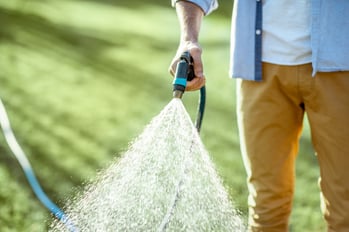
Most lawns need about 1 inch of water per week, including rainfall. This amount can vary with season and climate, but it is a solid baseline for maintaining healthy, deep roots instead of shallow, weak ones. Watering deeply and less frequently is usually better than frequent, light watering, because it encourages roots to grow down into the soil.
Watering also plays a big role in how well your fertilizer works. Many granular fertilizers need to be watered in after application so the granules can break down and release nutrients into the soil. If fertilizer sits dry on the surface too long, it may not perform as intended. Proper moisture helps move nutrients into the root zone where your grass can actually use them.
Consistent watering supports both fertilization and weed control. When a lawn is evenly watered, fertilizer can be distributed and absorbed more effectively, leading to more uniform color and growth. Irregular watering often produces patchy results and can stress the turf, giving weeds an easier path to establish.
Granular weed control products and some pre-emergent herbicides also rely on moisture to move into the top layer of soil. Without enough water, they may not form the protective barrier needed to stop weed seeds from germinating. In this way, proper irrigation helps maximize the value of every fertilizer and weed control application you make.

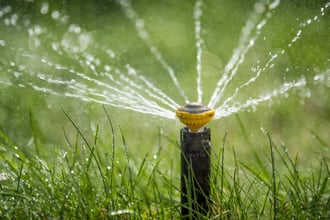
You do not need a garage full of tools to care for your lawn, but a few key pieces of equipment make things much easier. An irrigation system, either in-ground or with well-placed sprinklers, helps you deliver consistent water coverage across the yard. This is especially important in hot or dry periods when hand-watering becomes impractical.
Beyond watering, effective lawn and weed management usually requires a combination of fertilizer and weed control products matched to your grass type and local conditions. A quality spreader for granular products and a sprayer for liquid treatments can help you apply materials evenly and at the correct rate. With these basics in place, you can follow a more professional-style program at home.
(P.S. Making sure your mower blades are sharpened can also impact the health of your lawn, you can learn more about that here.)
Temperature and season have a major impact on when and how you should fertilize and treat weeds. Different weeds emerge at different times of year, so timing is just as important as the product you use. For example, pre-emergent weed control is most effective when applied in late winter or early spring, before weed seeds begin to germinate. Applying the same products in early summer, after weeds have already sprouted, will have little to no effect on those established plants (they will need post-emergent weed control).
Grass itself also responds differently throughout the year. In spring and summer, warm season lawns are actively growing and can use growth-focused fertilizers to build density, color, and resilience before the heat of summer. Aligning your fertilization schedule with your grass’s natural growth cycles leads to better results with less effort.
When you combine proper watering, the right equipment, and seasonally timed treatments, your lawn care routine becomes much more effective. A good plan typically includes:
About 1 inch of water per week, adjusted for rainfall and season
Fertilizer applications timed to your grass’s active growth periods
Pre-emergent weed control in late winter or early spring
Targeted post-emergent treatments as needed for breakthrough weeds
Every lawn is a little different, and sometimes having an experienced eye on your property makes all the difference. Our lawn care services include customized fertilization, weed control, and watering recommendations designed around your yard, not a generic schedule. Get started with a free estimate and see how easy a healthy lawn can be.
Keeping weeds under control without harming the grass is one of the biggest challenges homeowners face. The good news is that modern lawn care...
As fall arrives, you may start noticing a pesky little weed popping up in your lawn or garden: Hairy Bittercress. While it may not be as well-known...
Henbit (Lamium amplexicaule) is a common winter annual weed that thrives in cool, moist conditions. While its small, purple flowers may seem...