



Skip to the main content.
Call Today!    phone-volume-solid

3 min read

How to Get Rid of Wild Violets in Your Lawn (And Why Fall Is Your Best Shot)

How to Get Rid of Wild Violets in Your Lawn (And Why Fall Is Your Best Shot)

Every spring, a few charming purple flowers show up in the shady corner of your yard and you think, "Aw, that's kind of nice." Three years later, that charming little patch has eaten half the backyard and laughs at everything you spray on it. Welcome to life with wild violet.

If you've been quietly losing this battle, here's some genuinely good news: right now, heading into fall, is the best window all year to finally get the upper hand.

First, Let's Make Sure It's Actually Wild Violet

Plenty of lawn weeds get blamed for being violets when they're something else entirely. Here's what to look for.Violets

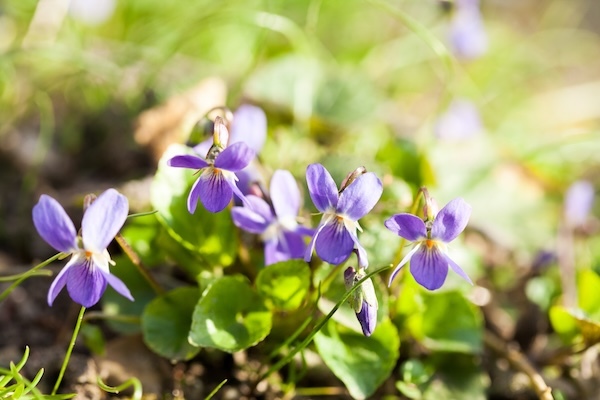
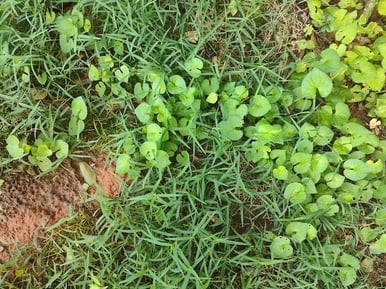
Wild violet (usually Viola sororia, the common blue violet) has heart-shaped leaves that come to a point at the tip, with rounded, scalloped teeth along the edges. The leaves are noticeably glossy, almost like they've been waxed, and on a mature plant they can get about three inches across. The flowers are deep purple to blue-violet, though white and speckled varieties show up too.

The big tell is where it grows. Violets love thin, shaded, damp turf. If your problem patch sits under a maple in Charlotte, along the north side of the house in Nashville, or in that spot in Atlanta where the fescue never quite fills in, violet is a strong suspect.

Two lookalikes worth ruling out: ground ivy (creeping Charlie) has scalloped leaves too, but they're dull, grow on square creeping stems, and smell minty when crushed. Broadleaf plantain has oval leaves with prominent parallel veins and no purple flowers at all.

See more: What are Wild Violets?

Why This Weed Is So Stubborn

Wild violet isn't tough by accident. It's built to survive, and it fights you on two fronts.

That waxy leaf coating. Those glossy leaves have a thick cuticle that sheds moisture, including the weed control products you spray on them. A lot of what you apply just beads up and rolls off instead of getting absorbed.

An underground network. Violets spread by rhizomes: thick, branching underground stems that store food and push up new plants. Pull one violet and you've removed the part you can see while leaving the engine running below. That's also why hand-pulling a violet patch tends to make it look worse a month later — you've disturbed the rhizomes, and they respond by sending up more shoots.

They also produce seed two different ways, including self-pollinating flowers that never open and quietly drop seed at ground level. Sneaky.

Read more: Why You Shouldn't Pull Weeds in Your Lawn

Why Fall Timing Changes Everything

Here's the part most homeowners never hear.

In spring and summer, perennial plants push energy upward  into new leaves, stems, and flowers. In fall, as days shorten and nights cool off, they flip the direction and start moving sugars and stored energy down into the roots and rhizomes to get through winter.

That downward flow is a delivery route. A broadleaf weed control product applied during that window doesn't just burn the leaves, it rides the plant's own plumbing straight down to the rhizomes, which is the only place that actually matters with violet. Treat in May and you may scorch the tops. Treat in the fall and you reach the part that regrows.

Across our service areas, Nashville, Charlotte, Greenville-Spartanburg, Atlanta, and Dallas-Fort Worth, that window generally runs from now through late fall, as long as the weeds still have green, actively growing leaves and daytime temperatures stay comfortably above the 50s. Violet stays green well past the first cool snap, which gives us more room to work than you'd expect.

Read more: Understanding the Life Cycle of Weeds: A Comprehensive Guide

Set Yourself Up for Better Results

A few things that make a real difference, whoever is doing the spraying:

Know your grass type. This matters more than anything. Products that are perfectly safe on tall fescue can damage Bermuda or Zoysia, and the reverse is also true. Warm-season lawns and cool-season lawns need genuinely different approaches to violet, not just different rates.

Plan on more than one round. Wild violet is rarely a one-and-done weed. The realistic expectation is a fall treatment, a follow-up in spring, and meaningful improvement over a season or two, not a single spray and a clean lawn by Thanksgiving.

Watch what's nearby. Some of the most effective products for violet are close cousins of brush killers. Drift or runoff onto azaleas, hydrangeas, or exposed tree roots can do real damage, so this isn't a "spray it and see" situation.

Fix the reason it's winning. Violet thrives where grass gives up. If the patch is shaded, soggy, and thin, thinning out overhead limbs, improving drainage, and building denser turf through aeration, seeding, and proper fertilization takes away the opening. Dense turf is the cheapest weed control there is.

And please don't pull them. We know it's tempting. You'll just be rototilling the rhizomes.

Let's Take That Corner Back

Wild violet is one of those weeds where timing is doing most of the heavy lifting,  and that timing is open right now. If those glossy heart-shaped leaves have been spreading a little further every year, this is the season to interrupt the cycle.

Top Turf's Fertilization and Weed Control Program is built around the southeastern calendar, so tough perennials like violet get hit when they're actually vulnerable instead of when it's simply convenient. 

Give us a shout, and let's see what's actually going on in that shady corner.


Summer Weed Pressure: Why June and July Are Make-or-Break for Your Lawn

1 min read

Summer Weed Pressure: Why June and July Are Make-or-Break for Your Lawn

Summer is beautiful, but so is crabgrass, and it's thriving right now. If your lawn has been looking a little rough around the edges lately, summer...
Fall Pre-Emergent Weed Control: Why August Is the Month to Start Planning

1 min read

Fall Pre-Emergent Weed Control: Why August Is the Month to Start Planning

It's still hot enough to fry an egg on the sidewalk, so fall weeds probably aren't on your radar. But here's the thing: by the time you're raking...

Crabgrass Is Sprouting Now: How to Identify and Stop It Before It Takes Over

1 min read

Crabgrass Is Sprouting Now: How to Identify and Stop It Before It Takes Over

Stepped outside lately and noticed some weird, wide-bladed grass pushing through your lawn in thick, star-shaped clumps? There's a good chance you're...